

Welding Certificates & Courses | KYB Academy
Welding Certificates & Courses | KYB Academy
Turn precision, skill and metal into a career. At KYB Academy, our Welding Certificates & Courses provide training routes for aspiring artisans, experienced welders and learners who want to develop practical welding skills. From a full Occupational Certificate: Welder to focused Coded Welder training and an introductory practical Welding Skills Programme, learners can choose training that matches their current experience and future career plans. Welding is a skilled trade built on control, accuracy, technical knowledge and practice. A professional welder needs to understand materials, welding processes, safety requirements, joint preparation and weld quality while developing the hands-on ability to produce consistent work. If you want to build a career in fabrication, engineering, manufacturing, mining, maintenance or other sectors where metal components are joined and repaired, KYB Academy provides structured welding training from our technical training centre in Potchefstroom.
Welding Certificates & Courses for Different Career Stages
There is no single welding course suited to every learner.
Someone who wants to become a qualified artisan needs a different training route from an experienced welder who wants coded welding skills. A learner with little or no welding exposure may first want practical experience before committing to a full occupational qualification.
KYB Academy currently offers three distinct welding training routes:
- Occupational Certificate: Welder – the formal NQF Level 4 artisan qualification route.
- Coded Welder Skills Programme – a QCTO NQF Level 4 Skills Programme for learners who already have welding experience.
- Welding Skills Programme – a four-week Non-NQF practical programme covering foundational welding and metalwork skills.
Choosing between them should be based on the qualification or skill outcome you want to achieve rather than course length alone.
Occupational Certificate: Welder – Train Towards a Qualified Artisan Career
Learners who want welding to become their formal artisan trade should consider KYB Academy’s Occupational Certificate: Welder. The qualification is registered as SAQA ID 94100 at NQF Level 4 and carries 373 credits. Its purpose is to prepare a learner to join metal products according to Welding Procedure Specifications using electric arc or gas welding processes.
The qualification develops competence in areas including:
- Cutting and gouging
- Gas welding
- Fillet welds
- Plate welds
- Pipe welds
- Shielded Metal Arc Welding
- Gas Metal Arc Welding
- Gas Tungsten Arc Welding
- Welding safety
- Weld preparation
- Practical welding control
- Workplace welding procedures

SAQA specifically identifies Shielded Metal Arc Welding, Gas Metal Arc Welding and Gas Tungsten Arc Welding within the qualification outcomes. Learners also work with cutting and gouging processes and progress from basic welds towards more demanding plate and pipe applications.
Practical, Theoretical and Workplace Welding Training
Becoming an artisan welder involves far more than practising weld beads in a workshop.
The Occupational Certificate combines Knowledge Modules, Practical Skills Modules and Workplace Experience Modules. This allows the learner to first build technical knowledge, develop practical ability and then apply that competence in a real workplace.
At KYB Academy, the programme progresses through technical campus training, workplace-integrated learning and preparation for the External Integrated Summative Assessment, which forms part of the route towards artisan certification.
Workplace exposure is particularly valuable in welding because conditions differ from one task to another. Welders must learn to prepare materials, interpret job requirements, work safely, select suitable equipment and produce a joint that meets the required specification.
The final goal is occupational competence, not simply course attendance.
What Does NQF Level 4 Welder Mean?
An NQF Level 4 Welder refers to the level of the Occupational Certificate: Welder within South Africa’s National Qualifications Framework.
KYB Academy’s Occupational Certificate: Welder, SAQA ID 94100, is registered at NQF Level 4. It is a 373-credit occupational qualification.
NQF Level 4 should not be confused with welding positions such as 1G, 2G, 3G, 4G, 5G or 6G.
Those welding position designations describe how a test piece or joint is positioned during welding. NQF Level 4 describes the level of a South African qualification.
They are two completely different systems.
A learner searching for an “NQF Level 4 welding course” is therefore usually looking for a recognised qualification or skills programme positioned at that NQF level, while a welder asking about “4G welding” is referring to a welding position and performance test.


Coded Welder Training for Experienced Welders
A welder who already has practical experience may want to progress into more specialised industrial welding work.
KYB Academy’s Coded Welder Skills Programme is a QCTO Skills Programme listed as SAQA ID SP-210402. It is positioned at NQF Level 4, carries 96 credits and runs for four months. KYB lists accreditation number 06-QCTO/SDP141024140743 for this programme.
Training develops competence across key processes including:
SMAW / MMA – Shielded Metal Arc Welding
GMAW / MIG / MAG – Gas Metal Arc Welding
GTAW / TIG – Gas Tungsten Arc Welding
The programme also covers welding health and safety, welding preparation, procedure discipline, weld quality, consistency, accuracy and practical welding tasks performed under workplace-simulated conditions. Learners complete a Final Integrated Supervised Assessment.
KYB requires applicants to have at least one year of welding experience and to be at least 18 years old. Academic entry requirements also apply.
This programme is particularly relevant to welders interested in technical work associated with manufacturing, mining, petrochemical environments, engineering, fabrication and shutdown maintenance projects.
What Is a Coded Welder?
A coded welder is generally a welder who has demonstrated the ability to perform a specified weld according to defined procedure, process, material, position and applicable acceptance requirements.
This means “coded welder” should not be treated as one universal certificate covering every possible welding job.
Industrial welding requirements can differ according to the work being performed. A welder may need to demonstrate competence for a particular process, joint, material, thickness, pipe or plate application, welding position or applicable industry standard.
For that reason, employers and projects may require specific welding approvals or performance qualifications.
KYB Academy’s Coded Welder programme develops practical competence in SMAW/MMA, GMAW/MIG/MAG and GTAW/TIG and prepares learners for the discipline, quality and assessment expectations associated with specialised welding work.
Types of Welding Certification and Training Routes
There is no single fixed number of welding certifications that applies to every welder.
Welding credentials differ according to the country, qualification system, welding standard, industry, process, material and type of work being performed.
In South Africa, learners may encounter several different forms of welding training and certification.
1. Occupational Welder Qualification
The Occupational Certificate: Welder is the structured artisan qualification route. It includes theoretical learning, practical skills and workplace experience and leads towards the external assessment required for occupational certification.
2. Coded Welder Skills Training
Coded welding training is aimed at developing more specialised welding competence and the ability to work according to defined welding procedures and quality requirements.
Process-Specific Welding Competence
Welders can develop competence in individual welding processes such as:
- SMAW or MMA / Arc Welding
- GMAW / MIG / MAG Welding
- GTAW / TIG Welding
- Gas welding and cutting
Position and Application-Based Welding Approval
Industrial welding can also involve qualification for particular welding positions and applications, such as plate or pipe welding.
This is why asking “how many welding certificates are there?” does not produce one universal number. A professional welder may accumulate different qualifications, approvals and process competencies during a career depending on the work they perform.
Which Welding Certification Should You Choose?
The right welding certification depends on your career goal and current experience.
If your goal is to become a qualified artisan welder, the most appropriate KYB route is the full Occupational Certificate: Welder and the associated artisan assessment pathway.
If you already have welding experience and want to develop specialised coded welding capability, the Coded Welder Skills Programme is the more focused option.
If you are starting out and want practical exposure before committing to a longer qualification, KYB Academy’s shorter Welding Skills Programme offers an entry point into welding and metalwork.
A certificate should therefore be chosen according to the job or qualification outcome you require rather than simply looking for the shortest programme.
Start with a Four-Week Practical Welding Course
For learners who want to gain practical welding experience without immediately entering the full Occupational Certificate, KYB Academy offers a Welding Skills Programme.
This is a four-week Non-NQF programme designed to build foundational welding and workshop skills. Entry requires Grade 10 with Mathematics or Mathematical Literacy, with EGD recommended.
The programme consists of six practical areas:
- Welding Safety and Workshop Fundamentals
Learners are introduced to PPE, safe workshop behaviour, welding equipment, consumables, material identification, measuring equipment and basic hand tools.
- Arc Welding – SMAW
Training covers arc welding principles, electrode selection, beads, fillet welds, butt welds and basic weld defect identification.
- Gas Welding and Cutting
Learners work with oxy-acetylene equipment, gas cutting, basic gas welding, heating and bending.
- MIG Welding
Training includes MIG equipment setup, wire types, shielding gases, flat and horizontal welding, penetration and practical assessment.
- TIG Welding
Learners are introduced to TIG setup, tungsten selection, shielding gases, thin material welding and clean weld finishing.
- Metal Finishing and Fabrication Basics
The final section covers cutting, grinding, bending, surface preparation and basic finishing processes.
This programme does not qualify a learner as an artisan welder. It is practical introductory training that can help someone build welding ability, assess whether the trade suits them and prepare for further technical development.
Is Welding a Good Career Path in South Africa?
Welding supports many of the industries that build, manufacture, repair and maintain South Africa’s physical infrastructure and industrial equipment.
The Department of Higher Education and Training’s 2024 National List of Occupations in High Demand includes Welder among the identified occupations. DHET defines occupations in high demand as occupations showing comparatively strong signals across employment, wages, vacancies and expected medium-term recruitment.
Welding skills can be used in sectors such as:
- Manufacturing
- Engineering
- Mining
- Petrochemical operations
- Construction
- Metal fabrication
- Industrial maintenance
- Transport-related engineering
- Plant shutdowns and maintenance projects
SAQA’s qualification itself was developed around the need for welders capable of working to recognised occupational standards, while KYB identifies manufacturing, mining, petrochemical and engineering environments as relevant sectors for its welding programmes.
Career opportunities still depend on qualification level, welding competence, experience, project requirements and the specific approvals required by an employer.
Who Is Suited to a Welding Career?
Welding can be an excellent technical career choice for someone who enjoys making and repairing physical things rather than working primarily behind a desk.
It may suit you if you:
- Enjoy working with tools and metal
- Have good hand-eye coordination
- Can concentrate for extended periods
- Work carefully and accurately
- Respect safety procedures
- Enjoy practical problem-solving
- Have patience to practise a skill repeatedly
- Take pride in the quality of finished work
- Want a technical trade with opportunities across several industries
WorldSkills South Africa describes welding as suited to people interested in craftsmanship, fixing things, making things and using tools. It also notes that welders can work on everything from steel beams and pipes to plates and pressure vessels, in settings ranging from workshops and construction sites to power stations.
Why Choose KYB Academy for Welding Training?
KYB Academy provides more than one entry point into welding.
A beginner can start with practical welding skills. An experienced welder can progress into the QCTO Coded Welder Skills Programme. Someone committed to an artisan career can follow the Occupational Certificate: Welder route with knowledge training, practical development and workplace-integrated learning.
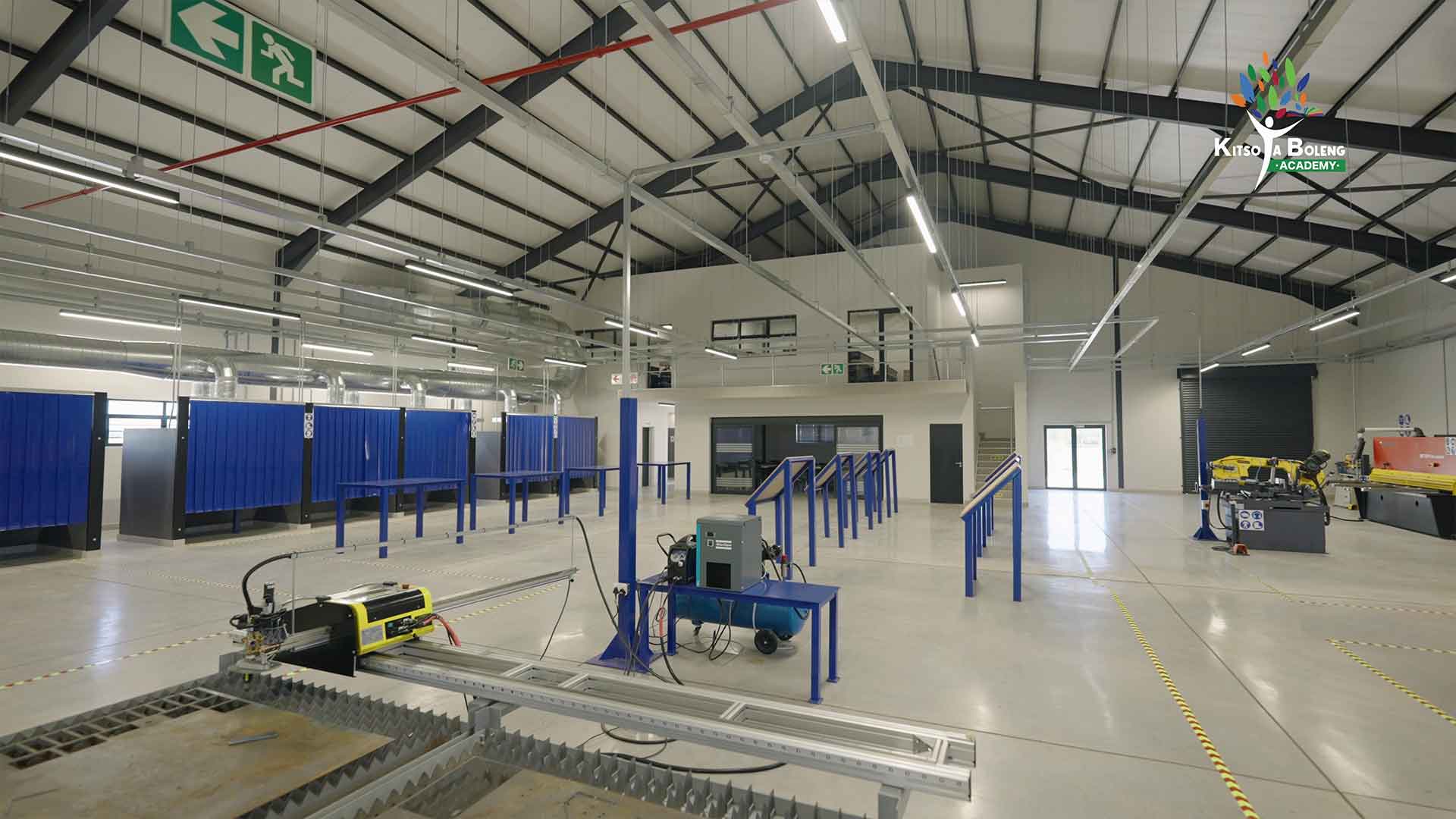
Training takes place with a strong practical focus. Depending on the programme, learners work with Arc, MIG, MAG and TIG welding processes as well as cutting, metal preparation, fabrication fundamentals and welding safety.
KYB Academy’s technical programmes are built around employability, practical competence and preparation for real technical environments.
Learners can also gain access to tools, PPE, training materials and consumables as specified for their chosen programme. The full Occupational Certificate programme includes a trade-specific toolbox and welding helmet, while the Coded Welder programme includes PPE and training consumables.
Build Your Welding Career with KYB Academy
Your starting point depends on where you are now and where you want welding to take you.
- Choose the Occupational Certificate: Welder if your goal is a formal artisan qualification.
- Choose the Coded Welder Skills Programme if you already have welding experience and want to strengthen specialised welding competence.
- Choose the four-week Welding Skills Programme if you want practical exposure to Arc, gas, MIG and TIG welding before progressing further.
Speak to KYB Academy about current intakes, entry requirements, course fees and the welding training route that fits your career plans.
Build the skill. Master the process. Create a career from your craft.